

Quick Summary
Cloud-based POS solutions help retailers move away from old systems with high upfront costs. These systems update inventory instantly, let staff serve customers anywhere, and make managing multiple stores simple from one dashboard.
Table Of Contents
Introduction
Businesses who are looking to grow and scale their business are moving ahead from managing their operations and functions from legacy systems, and shifting to cloud based ones. Traditional cash registers and old software often slow down work, create data problems, and make it hard to manage multiple store locations. Modern technology now offers a smarter way to handle sales, track items, and serve customers faster. In this blog post, we will explore the main reasons behind this shift and how cloud-based POS solutions help retailers run their business more smoothly every day.
Key Takeaways
Cloud systems save money with lower upfront costs and simple monthly fees.
Inventory updates in real time so you never sell what you do not have.
Staff can serve customers anywhere in the store, not just at the counter.
Manage multiple locations from one dashboard without extra IT staff.
Your business keeps running even when the internet goes down.
Moving from Big Upfront Costs to Simple Monthly Fees
Let us see why retailers are switching to cloud POS systems. Usually, the traditional POS systems require a very large amount of money paid upfront. You must buy servers, pay for licenses, and install everything before you can even start selling. If that server stops working, your entire store cannot process any sale until it is fixed.
Cloud systems work differently, where you only pay a simple monthly fee that covers everything you need. This predictable cost makes it easier to plan your business budget.
With retail POS software, the monthly fee includes all updates, security fixes, and payment compliance. There are no surprise bills when something needs repair. Looking at cloud POS cloud POS vs traditional pos.vs traditional POS, cloud lets you use your hardware longer since most of the work happens in the software, not on the machine itself.
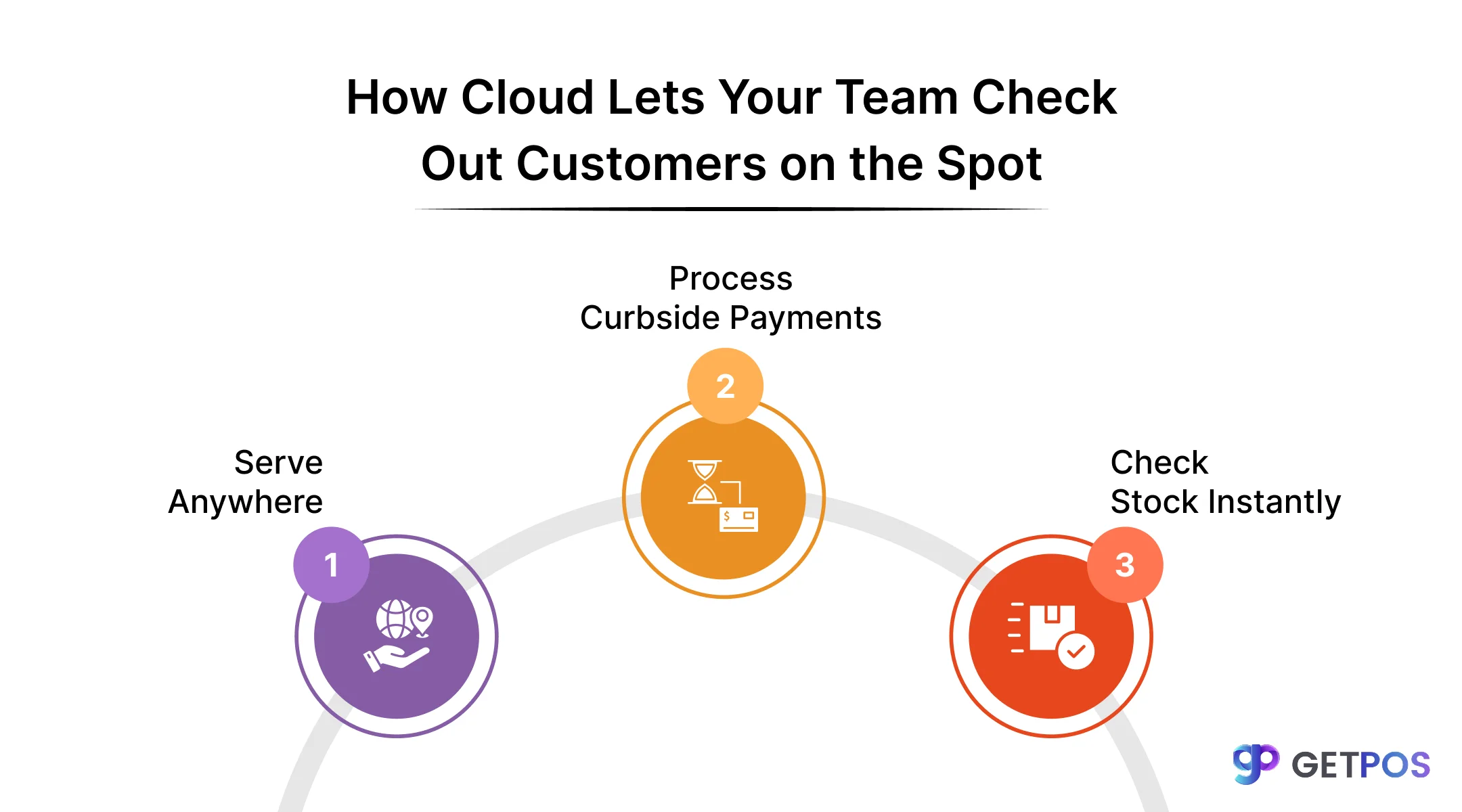
How Cloud Lets Your Team Check Out Customers on the Spot
With everything sped up in terms of attention, customers today do not want to wait in long lines. They expect quick service the moment they are ready to buy. When a store only has one fixed counter where all sales must happen, it creates delays and frustrates shoppers.
Using the cloud POS technology solves this problem by letting your staff move freely around the store. Using a tablet or a small mobile device, an employee can complete a sale right where the customer is standing. They can also check if an item is available in the back room without leaving the customer. For curbside pickup, they can take the payment outside the store.
This is a major difference when you compare Traditional systems force workers to stay behind the counter. They cannot leave that spot to help customers elsewhere. With cloud, staff members can go to the customer instead of making the cloud-based retail managementcustomer come to them. This reduces wait times, improves service, and helps close more sales throughout the day.
Check out the Benefits of Cloud-Based POS System.
Real-Time Stock Updates Across All Your Locations
Since inventory management is an important aspect for businesses, it becomes a major problem when you do not know what you actually have in stock. Traditional systems update inventory only once at the end of the day. This means you might sell an item in the morning, but your system still shows it available for hours, leading to overselling.
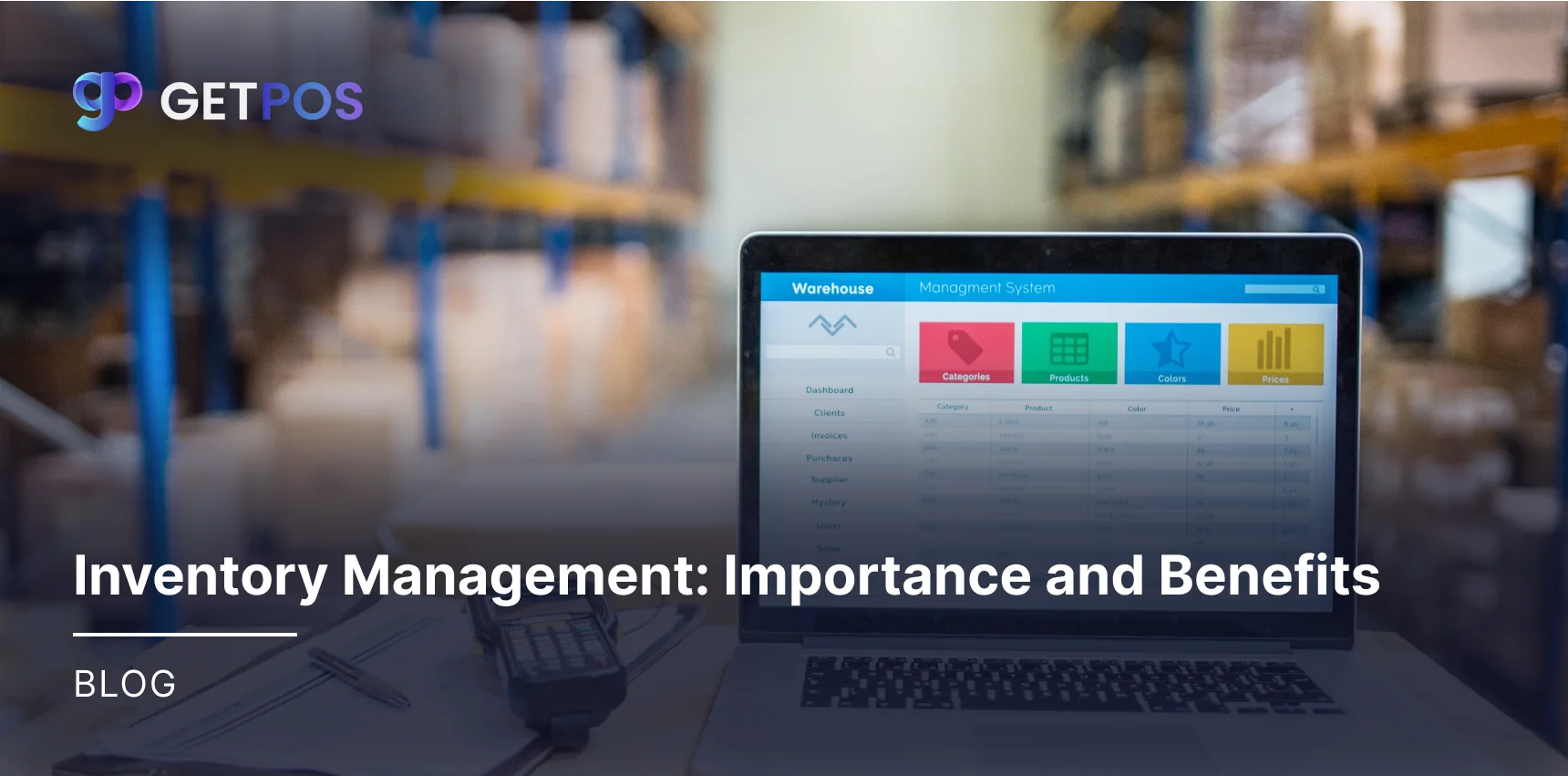
Cloud POS inventory management updates stock instantly. The moment a sale happens, your count changes right away. If you also sell online, your website reflects the same numbers.
This works for across multiple locations. If one store sells out, another location can fulfill the order. Staff can also order out-of-stock items for home delivery directly from the point of sale without losing the customer.
How Cloud Handles Outages, Security, and Multi-Store Needs
Staying Open Even When the Internet Goes Down
One common worry about cloud systems is what happens if the internet stops working. With a retail cloud POS system, this is not a problem. These systems have an offline mode built in. When the internet goes down, your staff can still process sales. The system saves all transactions on the device and syncs everything back to the cloud once the connection returns.
Simple Control for Multiple Locations
If you have more than one store, managing everything separately becomes very difficult. A cloud POS system for retail lets you control all your locations from one single dashboard. You can update prices, change employee permissions, and see sales reports for every store in one place. You do not need to visit each location to make changes or hire extra IT staff to manage servers.
Better Security Without Extra Work
Security is another area where cloud systems perform well. When you compare cloud POS vs traditional POS, cloud providers handle all the security updates automatically. They use strong encryption to protect customer payment data. With traditional systems, you must manage security yourself and keep servers locked in a back room.
End Note
Switching to modern systems is no longer just about processing payments. It is about having a system that helps you run your business better, with less stress and fewer surprises. Cloud-based POS solutions give you real-time stock updates, let your staff serve customers anywhere in the store, and keep your data safe without extra work. If you are ready to move away from old systems, GETPOS offers a simple, reliable solution built for retailers who want to grow without the usual challenges.
Frequently Asked Questions
Absolutely. Cloud systems work for single stores and multi-location businesses. You only pay for what you need.
Cloud POS has lower upfront costs with monthly fees. Traditional systems require large payments for servers and licenses upfront.
Yes. Most cloud systems have simple, touch-based interfaces. Staff usually learn within hours, not days.